




Post Tension Courts
Post-tension concrete slabs and traditional 5-inch concrete slabs both have their own unique benefits. However, post-tension concrete slabs offer a number of advantages over traditional concrete slabs.
Post-tension concrete slabs have a higher load-carrying capacity than traditional concrete slabs. This is because post-tensioning allows for the concrete to be reinforced with steel cables that are placed under tension. This results in a stronger, more durable slab that can support heavier loads without cracking or settling.
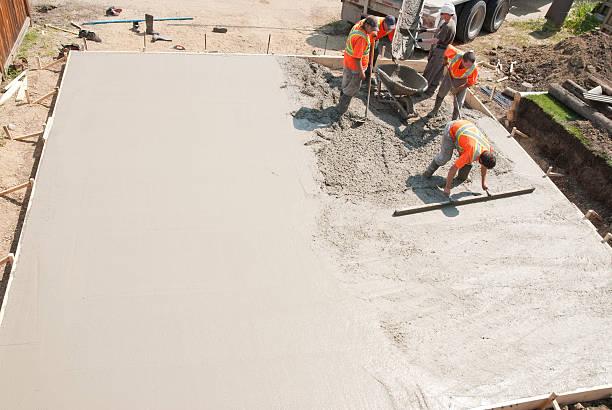
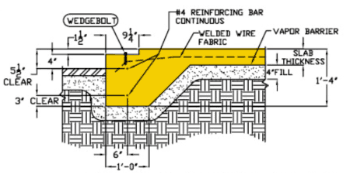
Another benefit of post-tension concrete slabs is that they are less prone to cracking and shifting. This is because the steel cables used in post-tensioning help to distribute the load more evenly across the slab. This helps to reduce the stress on any one part of the slab, which can cause cracking or shifting.
Post-tension concrete slabs are also more efficient to construct than traditional concrete slabs. This is because they require less concrete and steel reinforcement, which reduces the overall weight of the slab. This, in turn, makes the slab easier to handle and transport, which can save time and money during the construction process.
Overall, post-tension concrete slabs offer a number of benefits over traditional 5-inch concrete slabs. They are stronger, more durable, less prone to cracking and shifting, and more efficient to construct. These benefits make post-tension concrete slabs a great choice for a wide range of construction projects.
Post-tension courts we have built
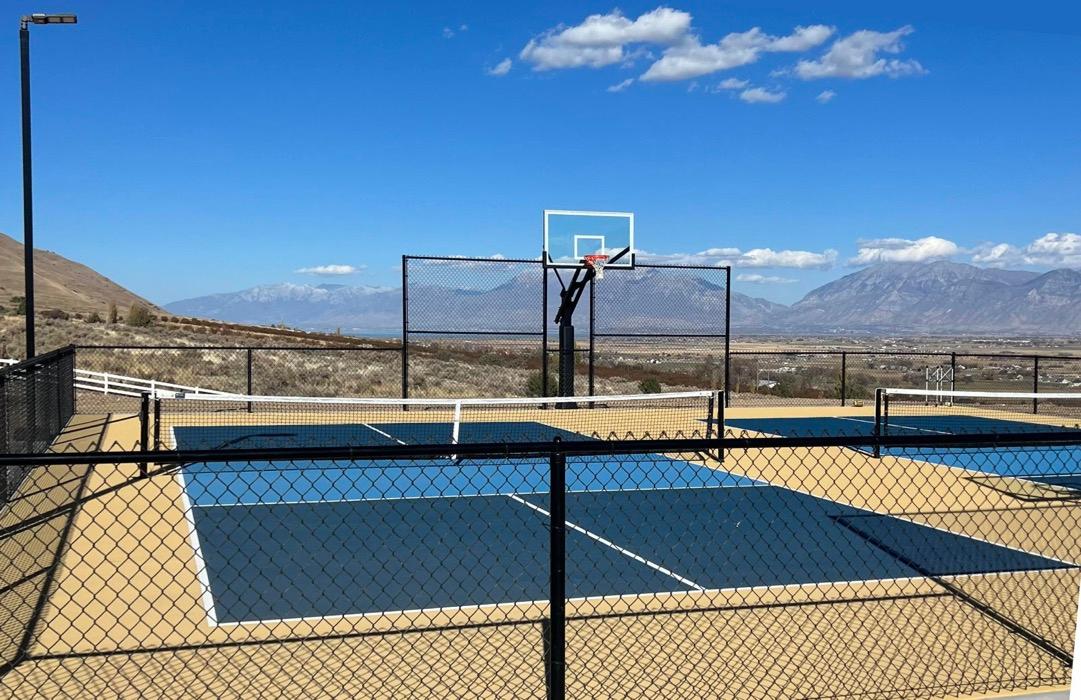
Payson Multi-Sport Pickleball and Basketball Court
A large family with grandchildren who come over often, and what they wanted was a double court — two pickleball courts side by side with a full basketball court over the top. Seventy feet by seventy. At that size the slab has to be post-tension. A conventionally reinforced pad that big will crack; post-tensioning holds the whole slab in compression so it does not. The ground helped here — it sits high on the shelf of West Mountain outside Payson, on foundations that were already built up and solid. The fencing is worth explaining, because it is not the same height all the way round and it should not be. Four feet runs the outside, which is right for keeping pickleball in. Behind each hoop there is a twenty-foot run at ten feet tall. Missed shots go backwards, and that one change takes most of the ball-chasing out of a court this size. We recommend it anywhere there is a hoop. The net posts take removable sleeves, so the pickleball nets lift out when they want the basketball court whole. A sand dune border with navy zones and a royal blue kitchen, inside black vinyl chain link. The hoop is a MegaSlam — built to be dunked on and hung from, 72-inch full glass backboard, lifetime warranty — on Douglas posts and nets. We fit both MegaSlam and Dominator, and the difference is material before it is anything else. MegaSlam hoops and Douglas posts are steel; Dominator is aluminium. Dominator is a great deal of hoop for the money and it is what most people choose. Steel costs considerably more and is what you choose when you want the best of it. On this court they went steel throughout.
Orem Tennis Court
A full-size tennis court, sixty feet by a hundred and twenty. At that size it has to be post-tension — a conventionally reinforced slab that large will crack. It is a six-inch slab with a twelve-inch thickened edge around the outside, and cables tensioned in both directions across the court, each stressed to 33 kips. That is what holds a slab this size in compression and keeps it from cracking as it ages. The site was the other half of the job. It was full of mature trees — firs among them — and trees mean roots. The excavation had to be thorough and deep enough to take the roots out with them, because roots left beside a court will lift it later. Traditional colours — grass green outside, navy inside. A ten-foot fence right the way round, which is what a tennis ball needs, with proper gates rather than the open corners a pickleball court can get away with. Lighting is on full twenty-foot poles aimed downward, so the court is bright to play on without throwing light across the neighbourhood.
Provo Multi-Sport Pickleball and Basketball Court
A company court, built for employees to use, and wanted on a short timeframe. Double pickleball with a full basketball court over it, on a post-tension slab — the same reason as any court this size, which is that a conventionally reinforced slab that big will crack. The fencing is not one height, and the surroundings are why. Four feet on the side people come in from, where you want it low and open. Ten feet on every other side, because there is a busy road one way, parking the other, and houses next door. A ball that leaves this court becomes somebody else's problem, so it does not leave. Douglas roll-away nets and MegaSlam hoops inside black vinyl-coated chain link, with benches and patio space along the side so people watching or waiting a turn have somewhere to be. The site had to give up its old trees and their roots first, and the soil was compacted afterwards to give the slab a solid base.